
Buy Now, Pay Later Is Growing. The Following are the Pitfalls of Those Small Payments.
9/1/2026
Buy Now, Pay Later has become an increasingly familiar option at checkout. Whether you are buying clothes online, replacing an appliance, booking a trip or even ordering groceries, you may be offered the chance to split the cost into several smaller payments, rather than paying the entire amount upfront.
At first glance, the appeal is easy to understand. A $200 purchase can feel much more manageable when the screen says you only need to pay $50 today. Many Buy Now, Pay Later, or BNPL, plans also advertise 0% interest when payments are made according to schedule.
But there is an important detail consumers should remember, Buy Now, Pay Later is still borrowing.
And, as these small installment loans become a larger part of Americans' financial lives, understanding the potential risks is increasingly important.
Buy Now, Pay Later Is Becoming Mainstream
The growth of BNPL has been significant. Federal Reserve researchers estimate that major BNPL providers originated nearly $160 billion in consumer credit products in 2025. Traditional "pay in four" products represented about half of that amount, while the remainder included other short- and longer-term installment products. More than 60% of the total credit originated carried a 0% annual percentage rate.
Consumers are also using these products more frequently. According to the Federal Reserve's 2026 report on the economic well-being of U.S. households, 16% of adults used BNPL during 2025, up from 15% the previous year and 10% when the Federal Reserve first began asking about it in 2021.
BNPL is clearly becoming another form of everyday consumer credit. That does not automatically make it bad. Used carefully, a short-term, interest-free installment plan can be a useful way to manage the timing of a planned purchase.
The problems can begin when the convenience of small payments makes borrowing feel less like borrowing.
The Small Payment Can Distract You from the Total Cost
One of the biggest psychological appeals of BNPL is that the consumer is presented with the installment rather than the full purchase price.
Instead of asking: "Can I afford to spend $400?" You may find yourself asking: "Can I afford $100 today?" Those are very different questions. The first considers the impact of the entire purchase on your finances. The second focuses on one small piece of the purchase.
When retailers break purchases into smaller installments, expensive products can suddenly appear much more affordable. That may make it easier to justify purchases that would otherwise exceed your budget.
Before selecting BNPL, try mentally removing the installment option entirely. Think, if you had to pay the full price today, would you still make the purchase? If the answer is no, it may be worth reconsidering whether financing it is the right decision.
Several Small Loans Can Become One Big Monthly Obligation
Another risk is what is sometimes called loan stacking, which occurs when a consumer has multiple BNPL loans at the same time.
One $30 payment every two weeks might be easy to manage.
But imagine having:
$30 due for clothing, $45 for an appliance, $28 for a gift, $60 for travel and $25 for an online order.
Individually, none of those payments sounds especially large. Together, they can take a substantial amount out of your checking account.
Unlike a credit card statement, where your purchases typically appear together in one account, BNPL obligations may be spread across several providers, merchants and payment schedules. That can make your total amount of outstanding debt harder to track.
CFPB research found that 63% of BNPL borrowers had multiple BNPL loans outstanding at the same time at some point during the year, and about one-third borrowed from multiple BNPL providers. That can make it harder to keep track of how much is owed and when payments are due.
If seeing all those obligations together is surprising, that may be a sign that BNPL is taking up more of your budget than you realized.
More Consumers Are Using BNPL Because They Cannot Otherwise Afford the Purchase
There is another trend worth paying attention to. BNPL is not only being used for optional purchases.
Federal Reserve data shows that consumers used BNPL in 2025 for clothing, electronics and furniture, but also for groceries and food delivery, travel expenses, and medical or veterinary procedures. One in five BNPL users reported using it for groceries or food delivery.
When asked why they used BNPL, 29% of users said it was the only way they could afford the purchase. That percentage rose to 40% among users with family incomes below $25,000.
That distinction matters. Using BNPL to conveniently divide a purchase you already have money available to cover is very different from relying on BNPL because you do not have enough money to buy groceries or another necessity.
When short-term borrowing becomes necessary to cover regular expenses, the issue may be less about that individual purchase and more about the household's overall cash flow. In that situation, adding another payment obligation may provide temporary relief without addressing the underlying financial strain.
Late Payments Can Make a "Free" Loan More Expensive
Zero-percent financing understandably attracts consumers, but zero interest does not necessarily mean there can never be a cost.
The Federal Reserve found that 26% of BNPL users made at least one late payment in 2025. Among consumers who were late, 64% reported being charged extra because of the late payment.
There can also be consequences beyond the BNPL provider itself.
Many BNPL plans automatically withdraw payments from a linked bank account. If the money is not available when the withdrawal occurs, the transaction can potentially lead to an overdraft or non-sufficient funds fee depending on your bank and account.
According to the Federal Reserve, 11% of BNPL users had a BNPL payment trigger an overdraft or non-sufficient funds fee during the previous year. That means a purchase advertised as interest-free can still contribute to additional costs if your budget becomes tight.
BNPL and Your Credit History Are Becoming More Connected
Consumers should also be careful about assuming BNPL activity will always remain separate from their credit history.
Historically, many short-term BNPL loans were not reported to the major credit bureaus in the same manner as traditional credit cards or installment loans. That landscape is changing.
In 2025, FICO announced FICO Score 10 BNPL and FICO Score 10 T BNPL, new scoring models designed to incorporate BNPL information. FICO said the models were created to better account for the increasingly important role BNPL plays in consumers' borrowing behavior.
However, the effect on any individual consumer remains complicated. Not every BNPL company reports every type of loan to every credit bureau, and lenders do not all use the same credit-scoring model.
The important takeaway is simpler: do not assume that BNPL borrowing is invisible. Consumers should treat BNPL payments with the same seriousness they would any other financial obligation.
When Can Buy Now, Pay Later Make Sense?
BNPL itself is not necessarily the problem. The way it is used matters.
For example, suppose you need to purchase a $400 appliance. You already have the $400 available in your budget, but you are offered four interest-free payments of $100. You confirm there are no additional fees, set aside the entire $400 and allow the scheduled payments to be processed.
In that situation, BNPL may simply provide additional flexibility.
A very different situation is using BNPL because you only have $100 available and are hoping you will somehow find the remaining $300 before the future payments arrive.
The first is a payment strategy. The second is borrowing against future income.
Before using BNPL, ask yourself:
- Could I afford the full purchase price without borrowing?
- How many other BNPL payments do I currently have?
- What will my total BNPL payments be over the next four to eight weeks?
- Are the payments coming out of my checking account automatically?
- Could the payment cause my account balance to become too low?
- Are there late fees, interest charges or other penalties?
- Does the provider report payment activity to credit bureaus?
- Am I using BNPL for convenience, or because I cannot afford the purchase?
Those questions can help separate a manageable payment arrangement from a financial obligation that could create problems later.
The Bigger Warning Sign: Financing Everyday Life
Perhaps the most important question is not whether BNPL is good or bad. It is why you need it.
If you occasionally divide a planned purchase into four payments and comfortably make each payment, BNPL may have relatively little impact on your overall financial health.
But if you regularly use BNPL for groceries, household expenses, clothing or other routine costs because there is not enough money available in your checking account, that deserves attention.
The convenience of BNPL can temporarily make a cash-flow problem less visible. It does not make the problem disappear.
When you find yourself repeatedly borrowing against your next paycheck, carrying growing credit card balances or juggling payments among several lenders, it may be time to look at your finances as a whole rather than searching for another short-term payment option.
Small Payments Still Add Up to Real Debt
Buy Now, Pay Later has succeeded in part because it makes borrowing extremely easy. In many cases, the decision to take out a loan happens in seconds, directly alongside the decision to make a purchase. That convenience makes it even more important to slow down.
Do not judge a purchase by whether you can afford the first installment. Consider the entire purchase price and all of the other financial commitments already competing for your income.
Four manageable payments can be useful. Four payments multiplied across five, six or ten purchases can become something very different.
If debt payments are becoming difficult to manage, a nonprofit credit counseling agency such as Navicore Solutions can help you review your budget, debts and available options. A financial counseling session can help you understand where your money is going and develop a realistic plan for moving forward.
The goal is not simply to make the next payment fit. It is to make sure today's purchases are not creating financial problems for tomorrow.
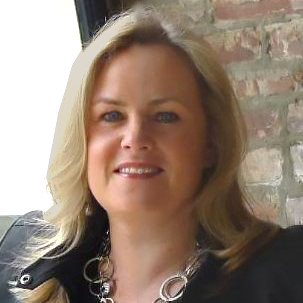
Lori Stratford is the Digital Marketing Manager at Navicore Solutions. She promotes the reach of Navicore's financial education to the public through social media and blog content.
You can follow Navicore Solutions on Facebook, X, LinkedIn and Pinterest. We'd love to connect with you.